I’m currently on vacation but I keep an eye on the tech news and commentary landscape. With all the brouhaha surrounding Claude Code spotty performance lately, I’m starting to be wary of resuming my work on some of my projects when I get back home. 😟
Apple was seen as a laggard in AI development, and in fairness, they clearly saw themselves that way and invested billions in trying to catch up to the likes of OpenAI and Anthropic, but they failed miserably. And yet, they seem like they’re going to be doing just fine. You need a computer to do all this vibe coding on. You need a phone to talk to an AI agent. Who makes the best computers and phones? Apple does.
MP3 vs iPod playbook all over again? Or is it different this time? Not having to pay for all the necessary infrastructure to run AI might be beneficial for Apple’s future.
So, Claude Code source code has leaked, for real? 😳 Or is this a bad April Fool thing? Seems serious if true… how can they cope with this? Why did it leaked and how? It sounds like a disaster for the company.
Personally, I couldn’t care less what you write on your /ai page. The same way I couldn’t care less if you use em-dashed. Words are cheap, easy to write, and they mean less and less. But your history, all the baggage you carry with you, all you have written and said, that is harder to fake, building it is time-consuming, but destroying it takes a second. If you start posting AI slop, my trust in you is gone in an instant, and no matter how you’ll try to justify it, that trust will not come back.
I can understand Manuel’s disdain of anything related to AI, but I feel his stance is a little too much “binary”; all or nothing. There must be a middle ground, isn’t it?
9to5Mac’s article “Vibe coding could mark the end of the App Store review process as we know it”:
Summary
The rise of AI-powered “agentic coding” has overwhelmed Apple’s App Store review process, with developers reporting review times of 3+ days to a week instead of the traditional under-24-hour turnaround. The influx of fully AI-generated apps from new developers has created a bottleneck for human reviewers, making it unfair for established developers whose update submissions are delayed. To address this, the author suggests Apple could implement separate review queues for established developers or automate updates while maintaining human review only for new submissions, though it may ultimately become necessary to reduce or eliminate full human review.
I don’t see the current review process at Apple as sustainable. I can imagine parts of the current workflow being automated (like finding instances of private API usage in application binaries). But, just for vibe coding, reviewing app submissions should be human-gated. An AI agent could even run the app in a simulator for testing.
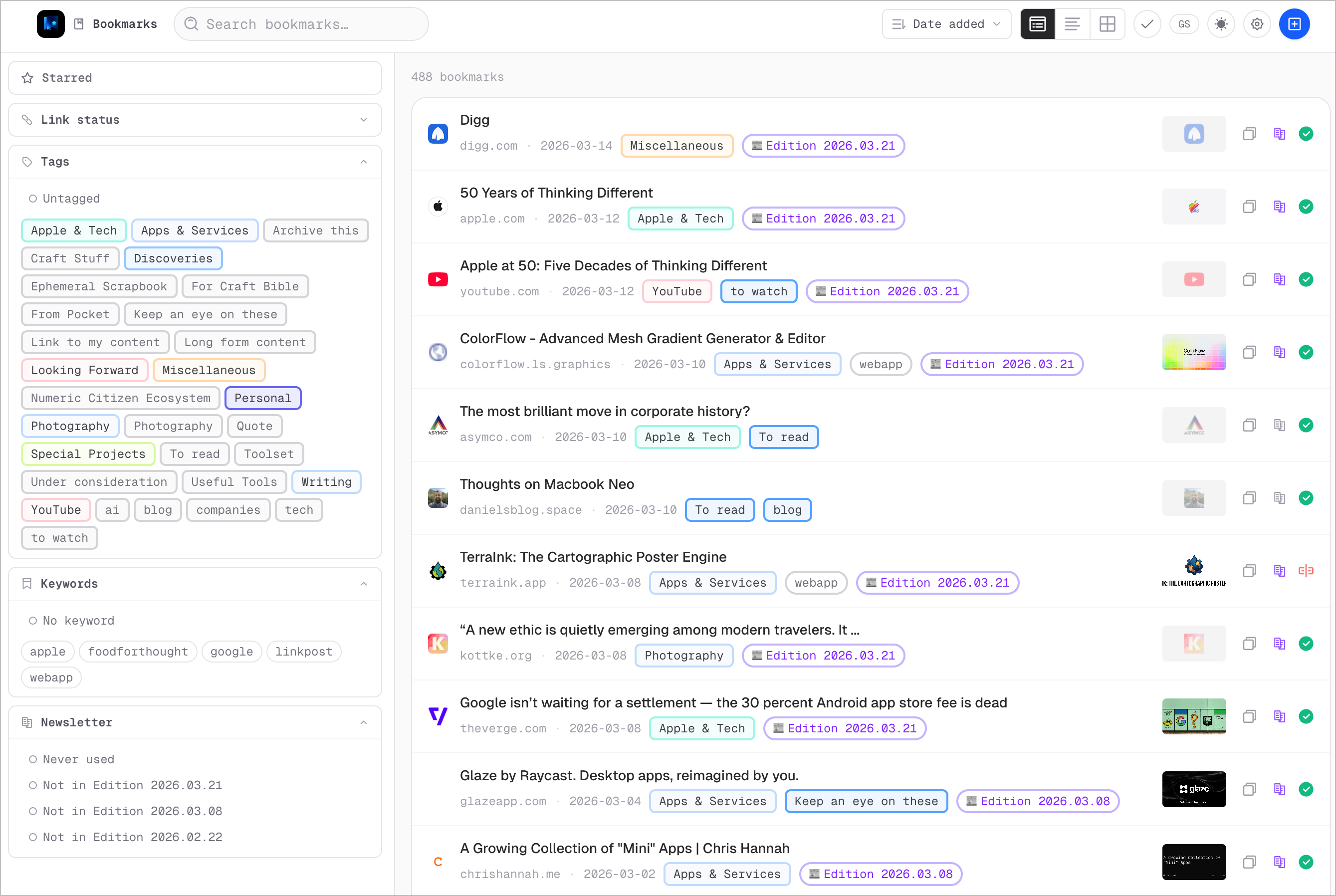
I finally put together a video demonstration of my RSS Reader and Bookmark Manager. It’s a much longer video than originally anticipated, that is why it is being posted on my YouTube channel instead of Micro.blog. You’ll get to see both apps in action. I’m rather proud of thse apps, they are now essential for me.
It seems I cannot finish this bookmark manager as I always find something to tweak, add or improve. I hope to record the video tomorrow! 👨🏻💻
It fits the broader pattern of what Meta is becoming. AI slop in your feed, fake engagement bots, insecure messaging. The direction of travel is obvious. None of these things are surprises or mistakes. They are deliberate decisions made by a company that has decided the path forward is to extract as much attention and data as possible, and anything that gets in the way of that, including basic privacy protections, gets quietly deprecated because apparently not enough of you were using it.
And Meta is about to deprecate 20% of its workforce because of… too much spending on AI infrastructure that doesn’t move the revenue needle. What a wonderful American corporation.
Just as streaming services helped lower the cost of music, AI is reducing the price of software even more than the subscription model does. The downside is that AI is driving hardware prices up, and it’s uncertain whether we will ever see the return of the always-cheaper hardware trend.
Since my bookmark manager is almost complete, I plan to record a demo to share here. I like its integration with my other web apps, such as the Micro.blog front-end for posting linkposts and the feature that exports selected links and quotes to a markdown file, which will be included in an upcoming ephemeral scrapbook edition.