I’m a Big Fan of Craft But…

As you probably know, I’m a big fan of Craft. This application is really at the center of everything I do online, as thoroughly documented in my blogger workflow. That being said, I always keep an eye open for competing services, thanks to my Twitter list “Apps & Services”. Notion is one of them. Before Craft, there was Notion, which I loved too. But it felt too complicated or overkill for my needs. Craft is nowhere near Notion in terms of features. There is no comparison, even though I wrote one. Really. Yet, according to their recent tweets, Notion has been on a roll lately, adding features, tweaking things or rewriting a portion of the user experience like the text editing engine. So, where am I going with this?

It is tempting to think: what if I came back to Notion? I still have my account, after all. Things always look better on the other side of the fence, right? The thing is the speed of evolution of Craft, while being considered at a fast pace by some, I’m realistic, and I would argue the contrary. The team behind Craft is surely a fraction of Notion’s. Basic things are hard to come by. Said another way, my expectations aren’t met as fast as I wished. Take this week’s update, which was released earlier this week. While I’m happy to see improvements, there is not much to talk about. The release notes starts by the possibility to “star” a document, so it is easier to find in the navigation bar on the left. The second thing on the list is some improvements to the display of backlinks at the end of a page. While being welcomed by many, it’s not exactly mind-blowing. Sure it is a dot dot release (v2.0.3), but I was expecting so much more, as documented in my Craft wish list. Craft eXtensions, announced with the 2.0 release at the end of 2021 sure looks full of potential, but my expectations lean toward Craft’s core experience, which I find somewhat lacking.

I think I’m being overly demanding. Patience is a virtue.

Exploring the World of DJing

I always liked electronic music, but I’m not a musician. In recent moths, I’ve been exploring the world of DJing. It’s a way for me to feel that I can do music without deep knowledge of musical theory. It’s a fascinating world.

Last year I bought a Pioneer DDJ-400 controller for use with my Mac mini. There is two major roadblocks in my experience so far: finding good quality tracks to mix and selecting the best DJ app. I want to draw your attention to the software side of my story.

Some well known DJ apps are Rekordbox, Serato and DJay. My understanding is that in recent years, software makers all switched to subscription models. Application like Rekordbox will “unlock” some of its features while being used with certain DJ controller models, but to get the whole thing, you have to subscribe to some plan. It’s irritating for someone like me who’s just trying to learn and experiment. But there is another problem: applications design sucks. Rekordbox and Serato are visually terrible. On the Mac, these apps really feels like aliens coming from… I don’t know… even on Windows they probably look aliens. The best looking application is Algoriddim’s Djay, by far. Problem is, the application is lacking many features. For now, my conclusion is that It appears that we cannot have both fully featured applications with a great design.

On iOS 15 Update Conundrum — Why Apple Is Changing is Mind

Apple finally published the numbers of people who upgraded to iOS 15 and iPadOS 15. While the percentages show the vast majority of users upgraded their devices, there are more people than with previous years who didn’t. It’s probably Apple’s fault.

With iOS 15, Apple is no longer forcing users to adopt the latest release to get the latest security updates. A user running iOS 14.7 can stay there as long as he can apply the security patches made available for that version. It’s an entirely new approach for Apple. I wonder why Apple made that change. I think I found one big reason.

If you compare Apple’s ecosystem to Android, Apple has a clear advantage here by being able to move the needle much faster for releases adoption, until now. In a single year, Apple can transform its ecosystem of users by adding features that are quickly making their way into people’s devices. By allowing users to stay on previous releases, Apple is shooting itself in the foot. Now they seem to change their mind, though. Apple could be changing his mind. As reported by MacRumors:

iOS 15‌ used to be listed as an optional update on devices running iOS 14, but now it is front and center on devices that still have iOS 14, and it is the only available update option as Apple has now stopped making security updates available for devices running iOS 14. Those who want the latest security fixes need to upgrade to ‌iOS 15‌, as all devices capable of running iOS 14 also support ‌iOS 15‌.

I think it’s the right move for Apple, since they tend to support old devices longer than other manufacturers. Apple could tweak iOS to be less aggressive is upgrading to the latest release by introducing delays in a random manner. Users eager to upgrade can do so manually, others would randomly get a notification suggesting the availability of the newer release. As time passes, those notifications would increase in frequency. This new behaviour will probably never come to like and not be enough. Here is why.

There might be another reason behind this change of mind on Apple’s part. Look at antitrust regulations looming on the horizon all around the world. Apple is probably making sure that all users adopt the latest release faster to comply with possible new regulations imposed by lawmakers, which would need to trigger changes to the operating system.

Bye Bye 500px

It was written on the walls: my subscription to 500px is coming to an end next week, and I won’t renew. It was a nice ride for sure, but Smugmug + Glass took over. Sure, comparing those services isn’t fair. For my needs, 500px doesn’t fit anymore. Another reason is the fact that I’m not taking as many photos as I used to, thanks to the pandemic.

I’ll keep my 500px account but in “read-only” mode for the year to come.

Carriers vs Apple

Om Malik writing on the iPhone fifteen anniversary and the carrier companies at the time (emphasis is mine):

These were wireless walled gardens crammed with absolutely rotten apps, games, and everything from mobile backgrounds to ringtones. They were an opportunity for carriers to nickel-and-dime their customers and extracted mafia-like fees from startups. Source: Looking back: iPhone & its impact on mobile industry & us. – On my Om

I have great admiration for Mr. Malik, but a lot of people, especially developers, would jump in right here and use the same paragraph to describe Apple and its App Store today. You may agree or not with them. I mostly don’t.

"It’s not just how things look, it’s about how things work."

Somehow, I missed David Sparks’ observations regarding the Wallpaper feature of Apple’s Design Team (emphasis is mine):

Instead of quoting Steve Jobs, I would have preferred an explanation from Alan Dye about his philosophy of user interface design and what his north star is when he does his work. I’d like him to make his case. If he explained the thinking behind this minimal approach, it might make more sense. Maybe this article was never meant to be that kind of deep dive on design philosophy, but it feels like a missed opportunity.

Indeed. I’m not fond of Alan Dye’s work.

Source: The Wallpaper* Feature on the Apple Design Team and a Missed Opportunity - MacSparky

Blue vs Green Bubbles — Blue is In, Green is Out?

A recent article in the Wall Street Journal created a concerted reactions chain from news sites and people on Twitter. In “Why Apple’s iMessage Is Winning: Teens Dread the Green Text Bubble”, the WSJ article paints Apple as using highly questionable tactics to keep its users locked in iMessage messaging service. I want to share my thoughts on this.

Peer pressure among teens isn’t a new phenomenon, far from it. Way before the Internet became accessible, when I was a teen myself, I vividly remember the feeling of not wearing the same brand of clothes as my friends. The problem here is teen’s social behaviour, not the technology. They are the one to blame if they reject people using non iMessage messaging service. I would argue that Apple as nothing to do with this. Sure, they like the stickiness of their platform, but I wouldn’t say it’s the defining goal when they add features to it.

Of course, Apple can’t provide the dot-dot-dot feedback showing people who are actually writing a response to a text message because the SMS standard doesn’t provide that. Duh.

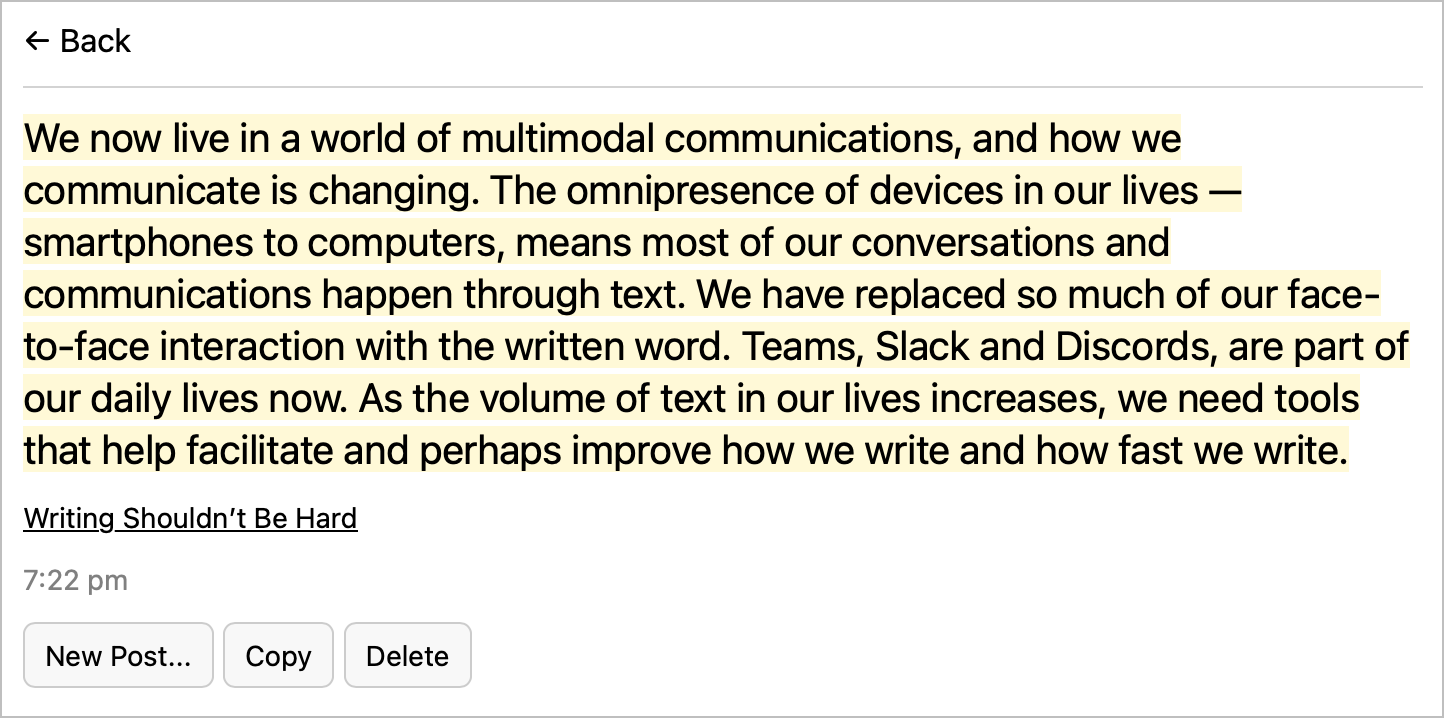
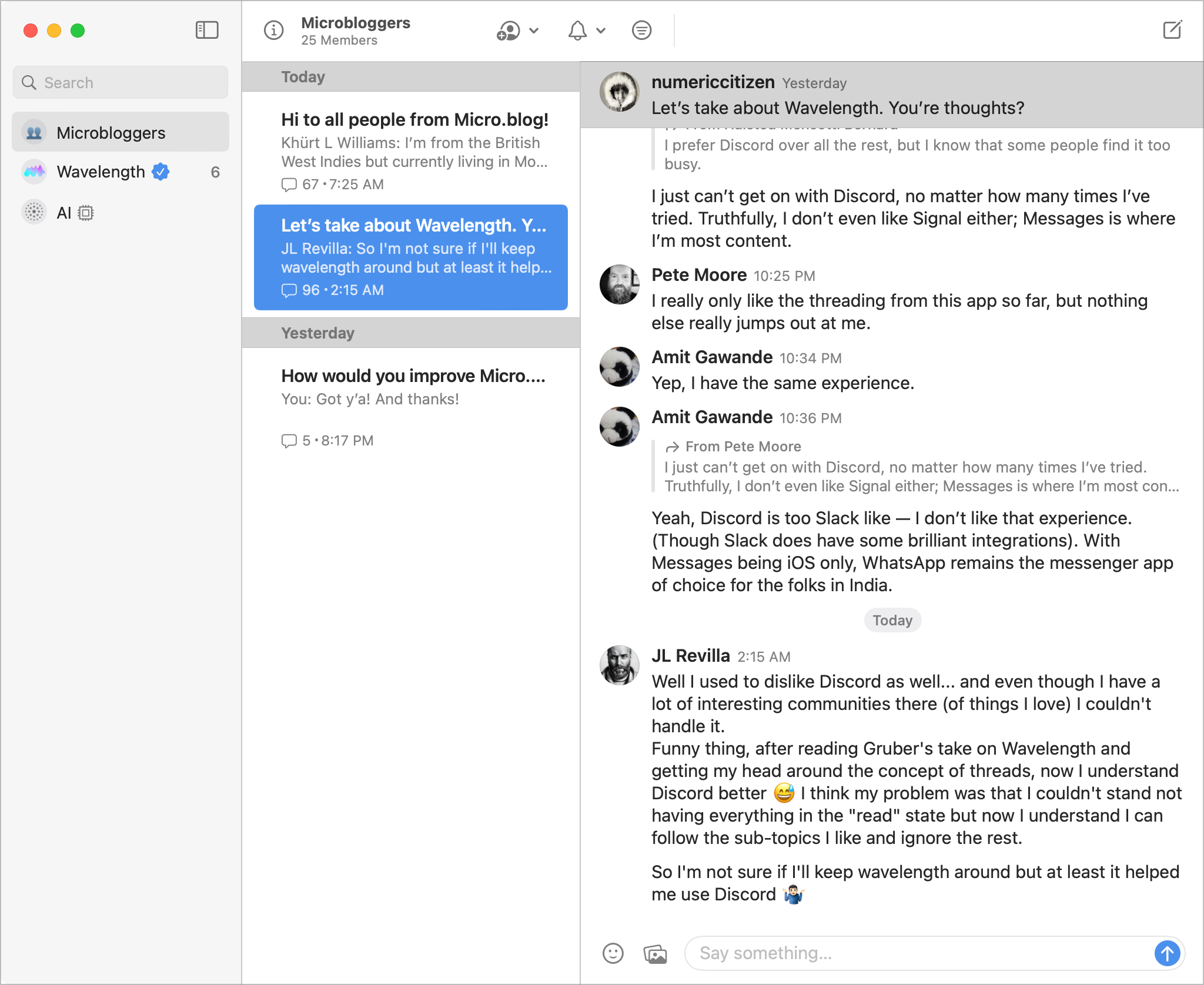
When Mr. Hiroshi Lockheimer from Google refers to “standards” in one of his tweets to fix the interoperability issues of messaging platforms like iMessage, I wonder what standards he is referring to, Google’s RCS. And if this standard is actually a standard, why is it so hard to take off? Why are messaging services like Discord, Telegram, WhatsApp, WeChat, Facebook Messenger, etc.?

I would also argue that, for a company like Apple, the ecosystem stickiness is part of their differentiating factor. Of course, iMessage plays a major role here. For a company like Google, where massively providing free services with ads, the more people who get to use your services, the more revenues you get. It’s their differentiating factor. It’s easy to say: Apple should open up their messaging service.

My anecdotal experience is to the effect that when something breaks in the conversation between an iPhone user and an Android users, they usually go with Messenger or WhatsApp. People still have access to many alternatives.

WSJ’s article is a prime example that finding the right angle to portray Apple as the devil in the room attracts numerous clicks.