Today was a special day. So many memories.

Today was a special day. So many memories.
Notes of interest from Apple’s Q2 2022 earnings report and conference call | AppleInsider
The last seven quarters have been the best ever for Mac
What a difference a few years make on the Mac. I’m happy to see the Mac thrive like this.
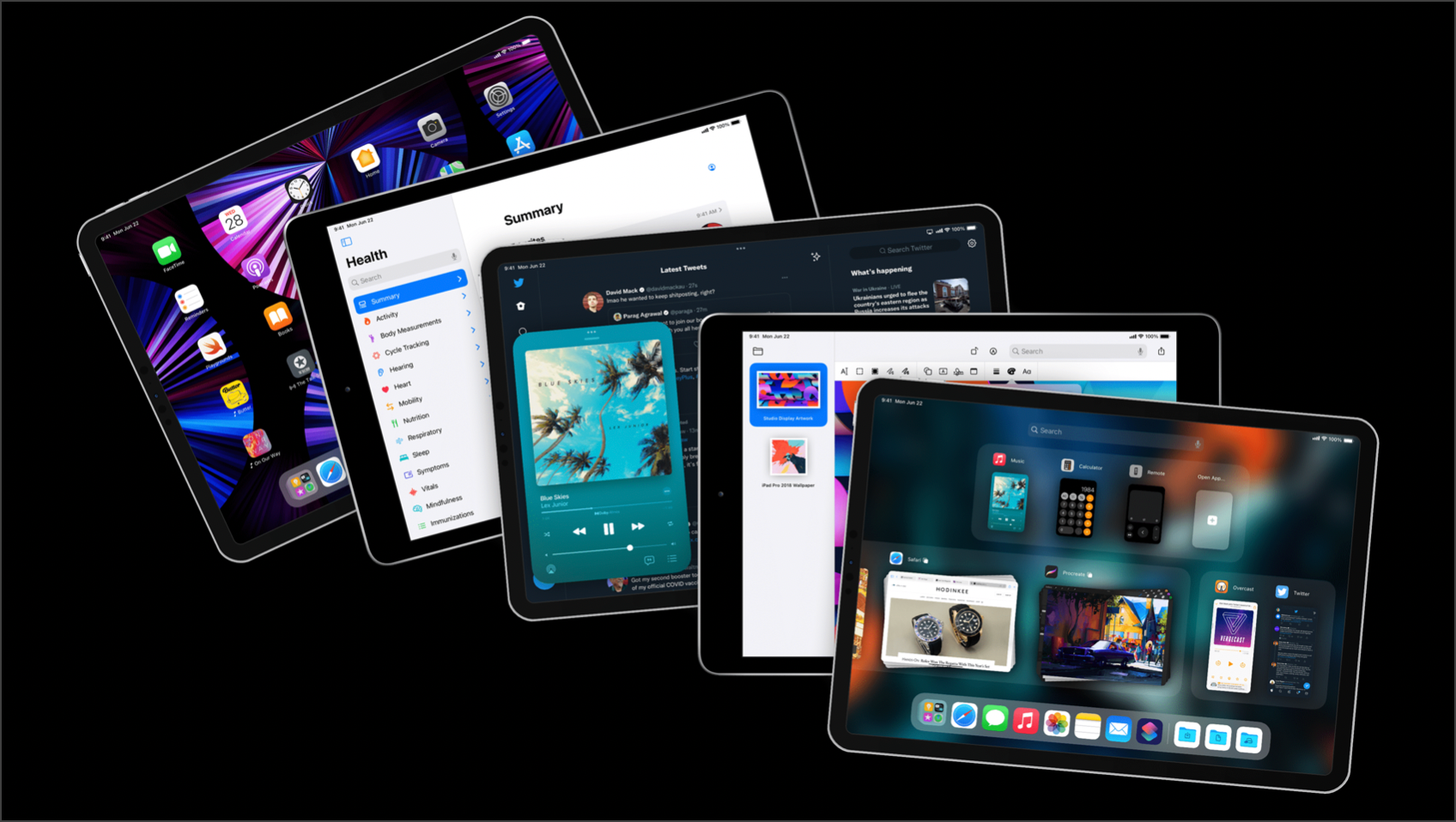
I recently wrote an article about where the iPad should go from here. On the subject of iPadOS, looking at this article on Behance from Parker Ortolani, here are the few interesting ideas that caught my attention:
WWDC 2022 is around the corner, starting another round of updates for iPadOs over the coming year.
Thanks to MacRumors, as reported today, I didn’t know today was the fifth anniversary of a special meeting between Apple’s top brass and select journalists to talk about Apple’s plans with the pro users and their commitment to the Mac.
At the time, we didn’t know how serious Apple’s upcoming pivot would be. In retrospective, Apple delivered and then some. It is simply a tour-de-force to flip the Mac product line upside down and bring power efficient, mighty and beautiful Mac designs. The Mac transition to Apple Silicon is probably the most important change to come to the Mac line since its inception in 1984.
I can’t wait to see what the next ten years will be made of.

This weekend I did some cleanup in my old papers and documents. I found an old bank account statement where I can see a withdraw transaction to help me pay for my Macintosh 128K in 1985: 3460.75 CAN$. 🤑 Ouch. I did some research to better document the time when I had a Macintosh SE while studying at the university and remembered about using Think Pascal, Prototyper and ResEdit to build a floppy disks indexer. That was before the Internet. It was so much fun. It’s gives you an idea how old I am. 😜

Well, after a promising start, following reviews of the Apple Studio display, it seems that I’ll put my buying decision on hold. As I wrote, one of the reasons why I’m considering this display is the integrated camera and speakers for a better video conference experience. It appears image quality is not good at all, judging by the examples posted online. It’s close to being a deal breaker.
Apparently, the Apple Studio display is running a version of iOS 15.4. Yep, sounds overkill, and yet, it’s the case, according to Gruber. Apple is promising a software update to fix the problem and bring image quality on par with the iPad Pro equipped with the same camera and essentially using th same software to enable Center Stage.
Here’s something: when we look at preview integrated cameras in MacBook Pro or the iMac and find the image quality to be bad, we try to excuse Apple of fitting a camera in a too-thin enclosure. But we know it’s not enough to explain the issue of image quality. Software is the problem. Look no further than the iPhone for an example.
As soon as:
Then, I’ll make a final decision. Now, I can’t wait to see in action the software upgrade process on this thing.

Benjamin Mayo in Apple Introduces Mac Studio:
“…the introduction of a brand new model of Mac is precisely the best time to do something entirely new.”
And
“The Mac Studio is a boring box with rounded corners, and has no party tricks to speak of. The trashcan was a truly wild, out-there, design.”
I share the same sentiment. A new form-factor is a rare thing from Apple. An elongated Mac mini doesn’t do justice the Mac Studio interior, even less to its name. Another missed opportunity. I guess “real pros” doesn’t give a damn about all of this.
It’s now official. Apple will host another virtual event next week, on March 8th. It’s the first Apple event of 2022, but it’s far from being the first real event of 2022. Current events happening in Ukraine are troubling and make me pause on a lot of things. Apple-related stuff is one of these. I’m not in the mood for that. My thoughts and energy are diverted, seized. I don’t care if it’s a new iPhone SE, a beefed up Mac mini or whatever else. These look so irrelevant in this incredible and terrible era. Low interest indeed.

I asked for this since the beginning of the Ukrainian war (on Twitter: first here, then here, then here), and today Apple delivered. Apple’s products are no longer being sold through its online store. While the App Store is still working apparently, I’m ok with their decision. On top of that, Apple will donate money, twice the amount that employees will give to help Ukrainians. It’s a good move, the only move, without using real arms, to make an impact. It’s even more powerful when many companies are doing exactly the same.
Yep, finally.
If you own a desktop Mac, you probably use an external drive for Time Machine. If you use a portable Mac, most likely not, and according to the Tidbits article, you’re not alone. The portability of the Mac is hindered by having an external drive hooked permanently. I, personally, have a different strategy: I use a Synology NAS DS720+ with Time Machine enabled to do my backups over the wireless network. It works perfectly, but I don’t do a full backup of my MacBook Air. Files that are part of iCloud Drive are excluded (read more here, you’ll find out why it’s a good idea). In fact, most of the files are excluded, except a few critical folders, outside the scope of any cloud syncing services. Applications aren’t backed up either (easy to recover in case of lost). Backups are small but are just what I need to protect my work.