I find Rewind to be very fascinating. Now, it comes with ChatGPT integration where I can ask for a summary of the things that I worked on last Friday, for example. It’s a great way to document my numeric life. There is a free-tier, but at 10$ a month for the paid tier, I mean, it’s a lot of money. Anyone tried it?
Introducing “My Micro-Workflows Explained” Series
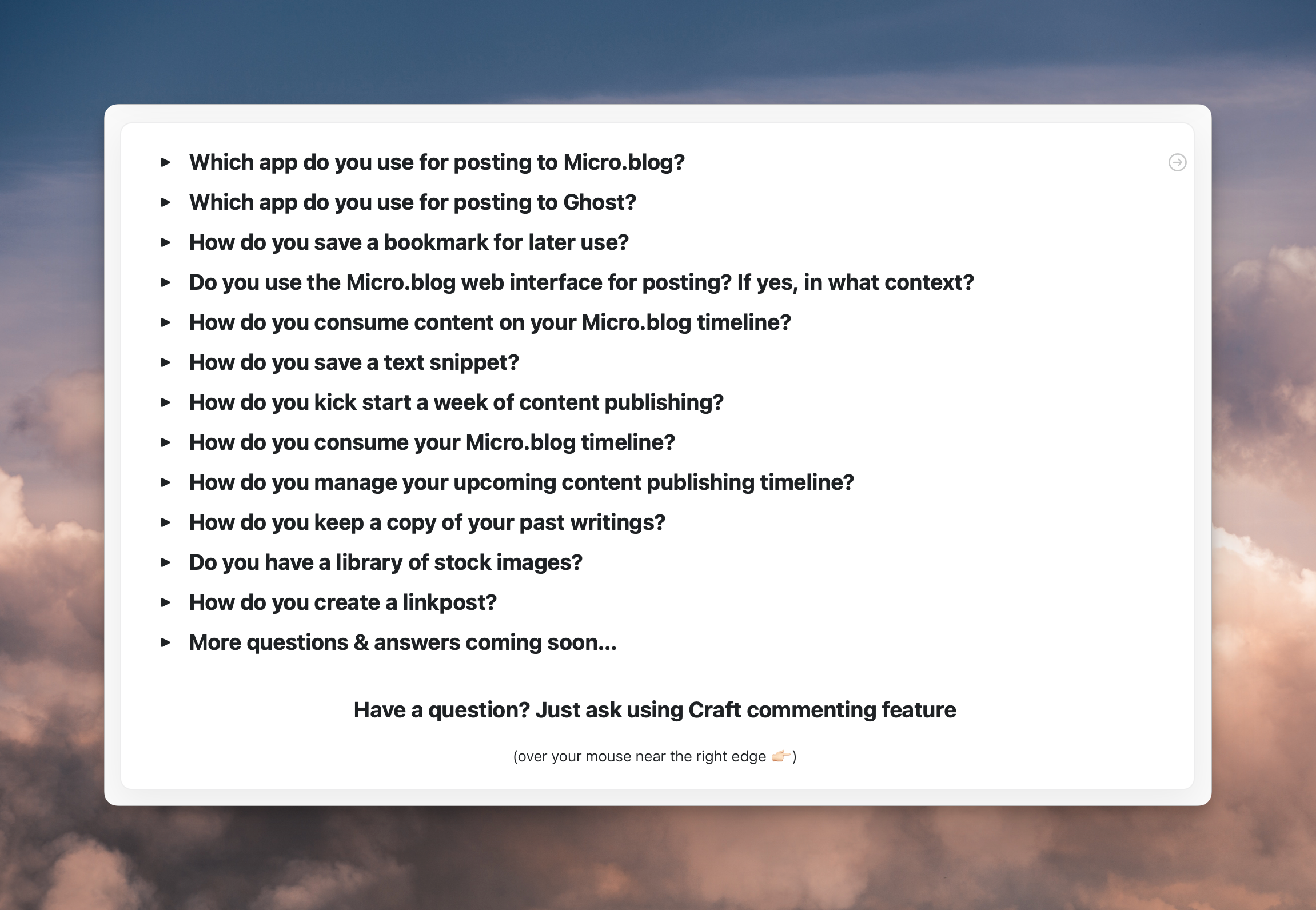
I’ve been working on this for a while and now I feel it’s time to share with the world. Follow this link, then expand each question to read the answer. It was a lot of fun to put together.
This site is going to be updated as new micro-workflows are documented or tweaked. This document is now joining my Complete Content Creator Toolset.
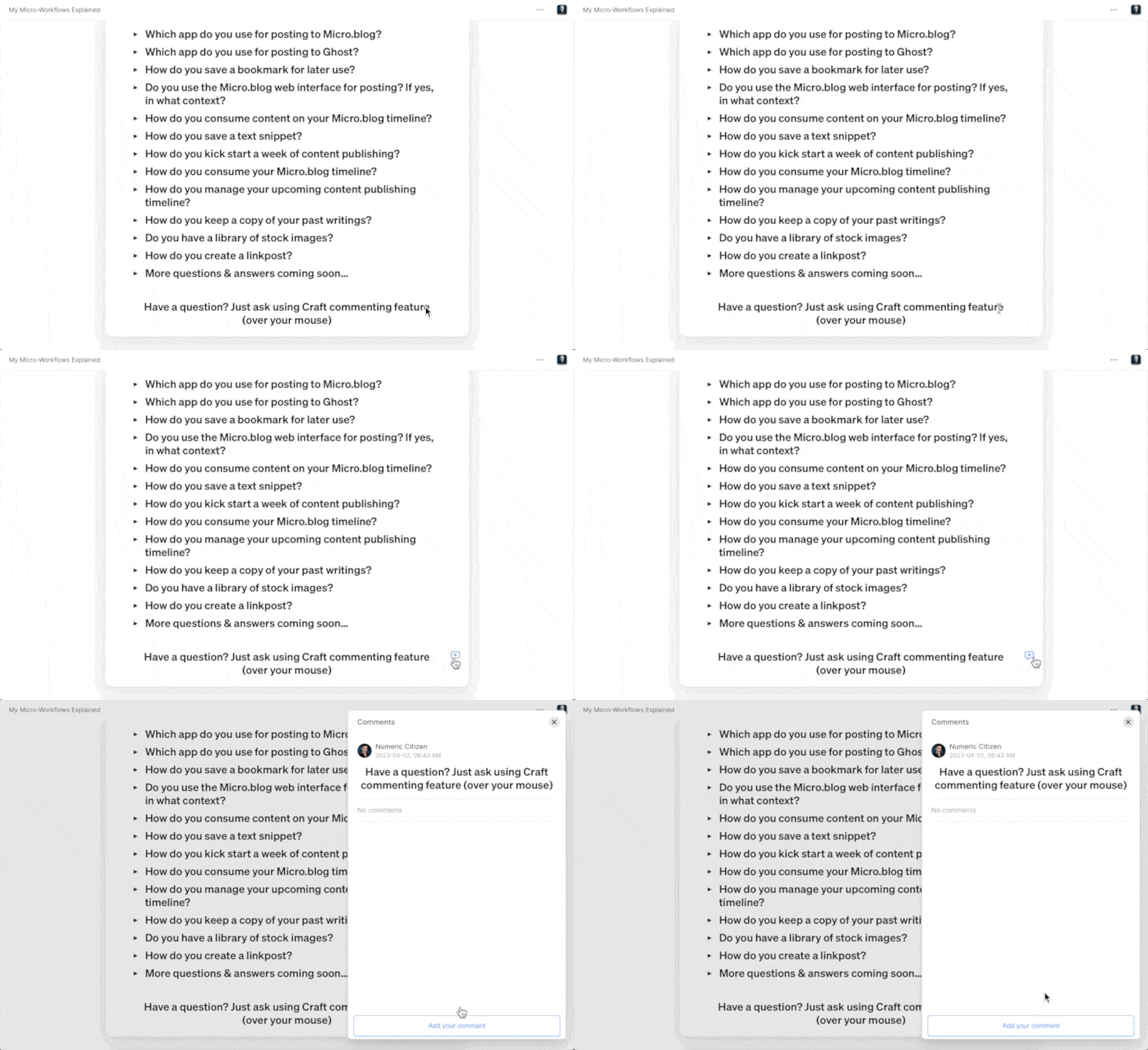
If you have a question, feel free to ask, using the commenting feature of the website as shown below. I welcomed suggestions for workflow improvements too! Enjoy and I hope you learn a few things along the way or that it triggers some ideas for your own workflows!
I’ve invested so much of my time into Craft, since I left Notion. I never really left Notion, actually, but my usage of this app dramatically dropped. Only a few very limited use cases were left under the Notion umbrella. Today, I tried something in Notion for a project at work. I’m blown away to see how Craft is so far behind compared to Notion for things like databases, integration via APIs and general flexibility.
Sure, Notion has been around for much longer. Yet, I secretly wish I could use the best of both worlds: the elegance of Craft built on top of the robust Notion foundation. I’m actively looking at use cases that I could do in Notion to keep it alive somewhere in my workflow.
Hey, just a reminder that this invite is still open if you are curious about Wavelength, a secure and simple messaging service. We’re currently 26 nice people in there! Come on and join! You can leave at any given time!
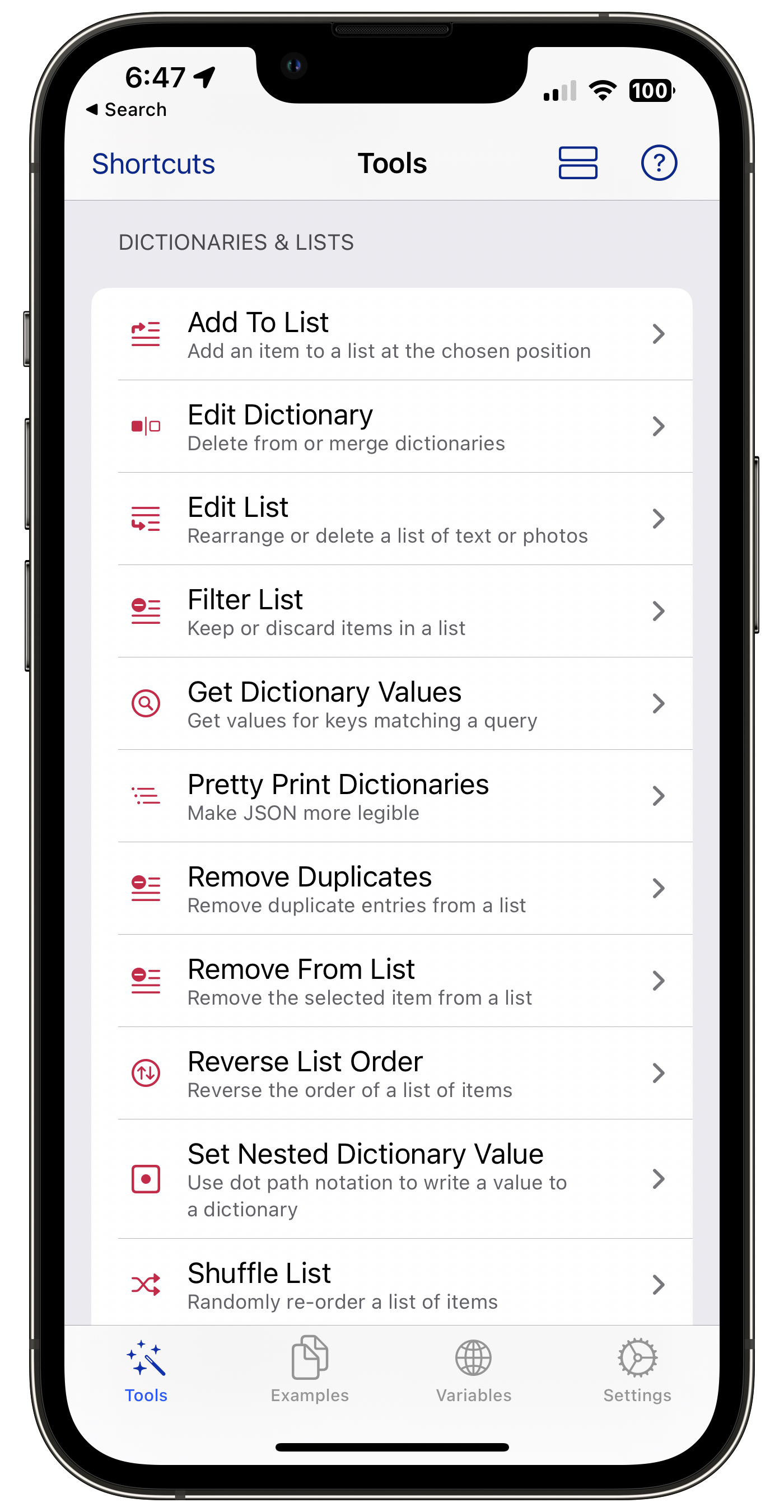
The maker behind ToolBox Pro has passed away, as reported here and there. It’s very sad. I recently re-installed this utility on my devices for a shortcut project I started working on. There are some features in ToolBox Pro that I could use, but now I’m not so sure. What will happen to this app? Is this developer account be terminated and when? Or maybe someone is going to take over?
Quick Thoughts and Observations About Wavelength
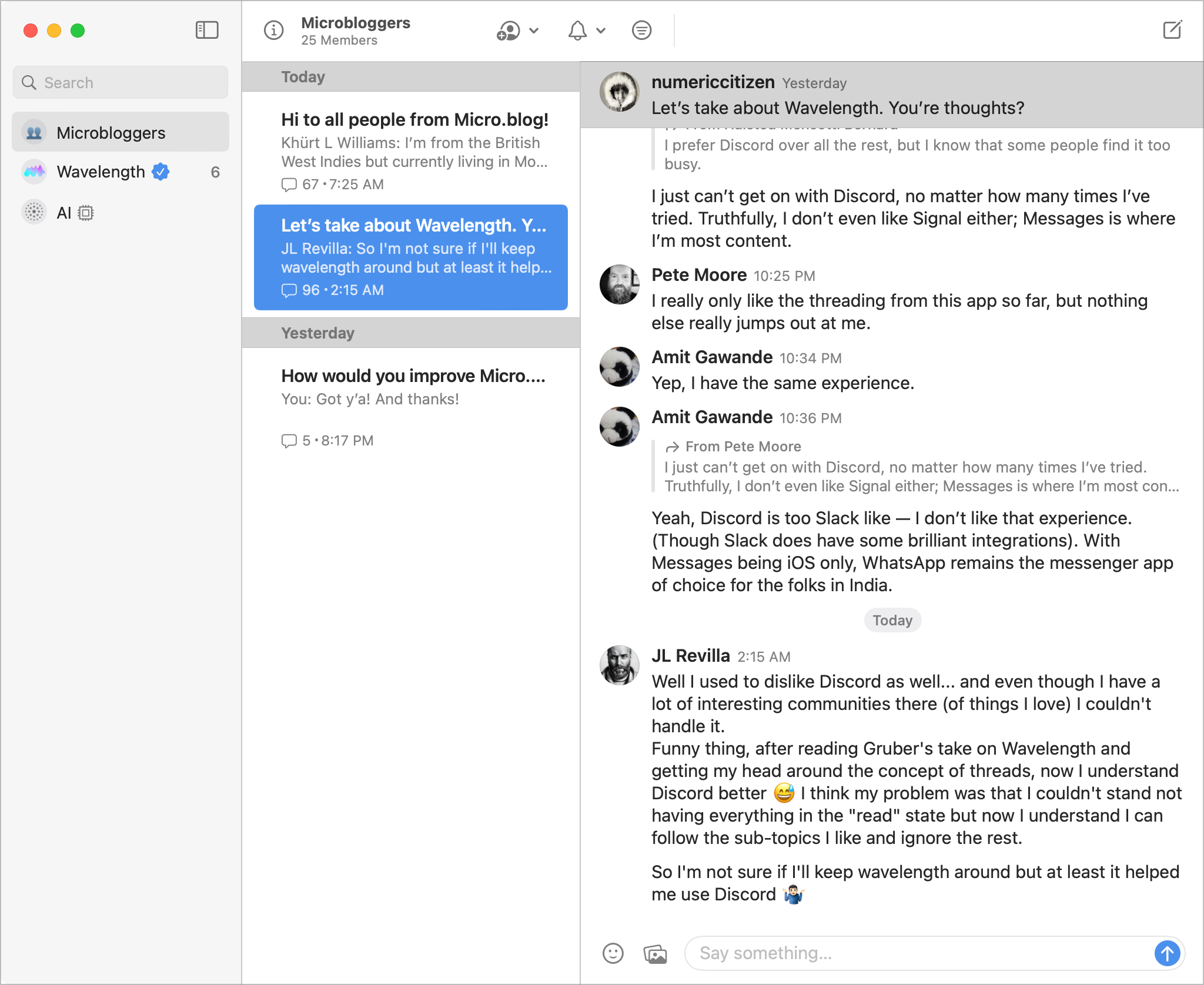
After reading Gruber’s article about Wavelength, I decided to try it. I’m not sure I require another messaging solution. Besides using Apple’s iMessage and Telegram to get news from Ukraine, the rest of my messaging app usage is anecdotic.
So, what are my thoughts about this? The initial few moments with Wavelength are not what I call an honest onboarding experience. Well, I already shared my surprise at having to enter my phone number at the very first step of the application onboarding. I thought it was brutal. I was quickly reminded that asking for our phone number is the usual thing to ask in a messaging app. M’ok. 🤨 But hey, Wavelength is still in beta, right? So, let’s give them a break.
So I created a group called Microbloggers (invite link) for hosting people coming from Micro.blog (well, anyone with the link can join). As I’m writing this, there are 25 members. I’m surprised. I wasn’t expecting that many people to join. I guess my Micro.blog circle is made of very curious people. I love this. Is @Manton joining? Nope. But @Jean is among the participant, which I find cool!
My general feeling with the application is that its design reminds me of Micro.blog’s simplicity. Wavelength is simple but not simplistic. I love it very much. I’m using Wavelength mainly on the Mac, but also on the iPhone. I prefer the Mac experience. But, again, Wavelength is not complete. I’m looking forward to watching its future evolution.
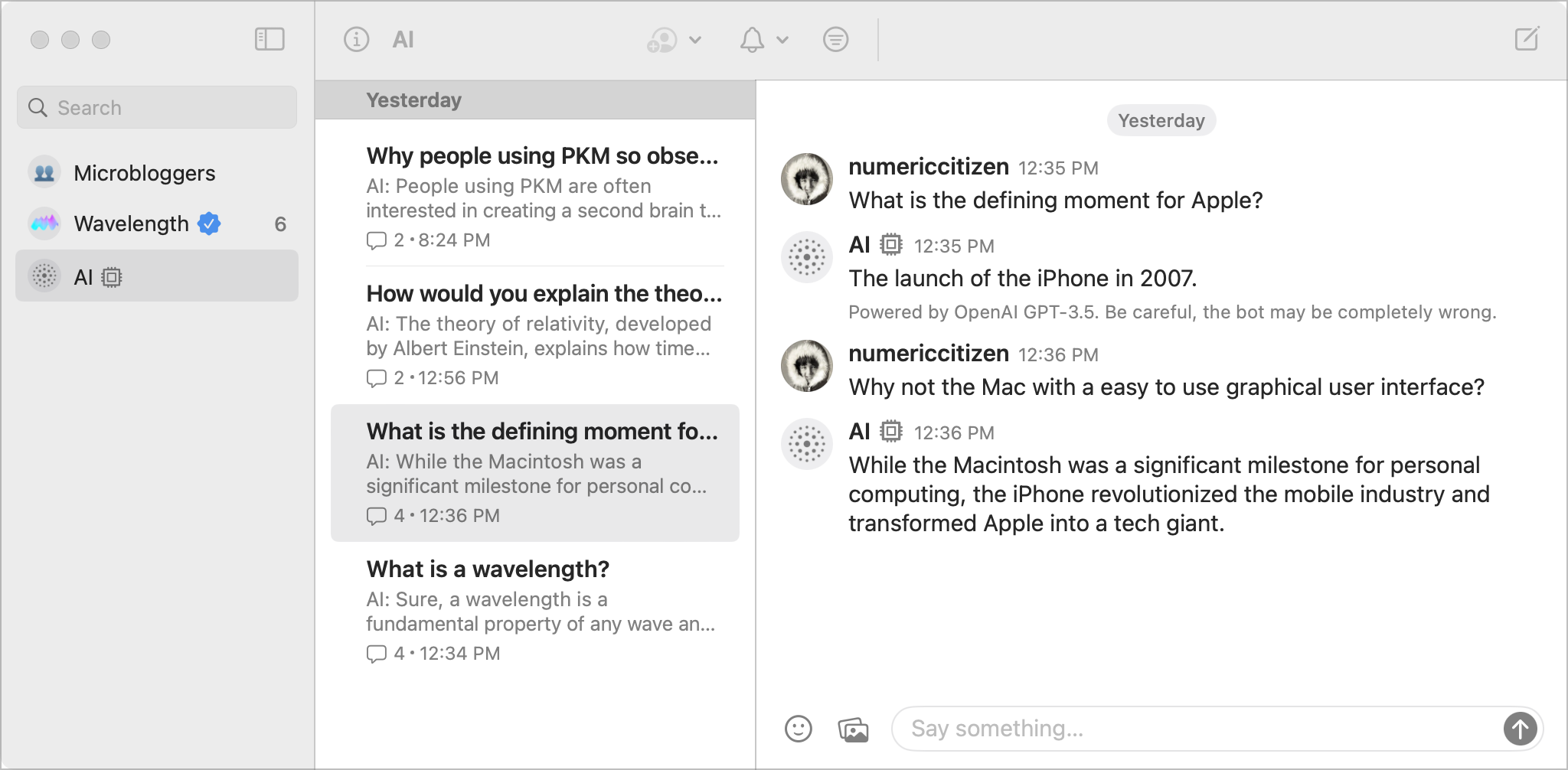
An interesting byproduct of Wavelength is the inclusion of a ChatGPT client inside. It’s the group called “AI”. We can interact with it at any given time, even include this “guy” in a conversation within a group, using the @AI in a message. Each request to the AI entity is kept as an individual conversation (except the one occurring within a group conversation). It’s fun, valuable and fascinating at the same time.
But now, the big question: why would someone of Micro.blog starts using Wavelength and participates in a group chat? Conversations are already happening on Micro.blog. Just like on Micro.blog, if you are a member of a Wavelength group, conversations are public. I’m still pondering this. I understand people who are also wondering about the usefulness of having Wavelength alongside the Micro.blog. Maybe the instant nature of such messaging platform is something missing on Micro.blog? This is something I liked on Twitter: this ability to enter a private conversation with one of your followers.
Well, that’s it for now.
You can join the “Microbloggers” Wavelength group with this invite link. I plan to leave the group open as long as my experiment with Wavelength lasts.
One last thing: after launching the app for the first time, this wave animation is mesmerizing.
Another thing: my avatar photo is me at 5. 😊
Testing the latest Micro.blog beta with picture upload. This is a screenshot of the current list of threads on Wavelength (invite link). 😎
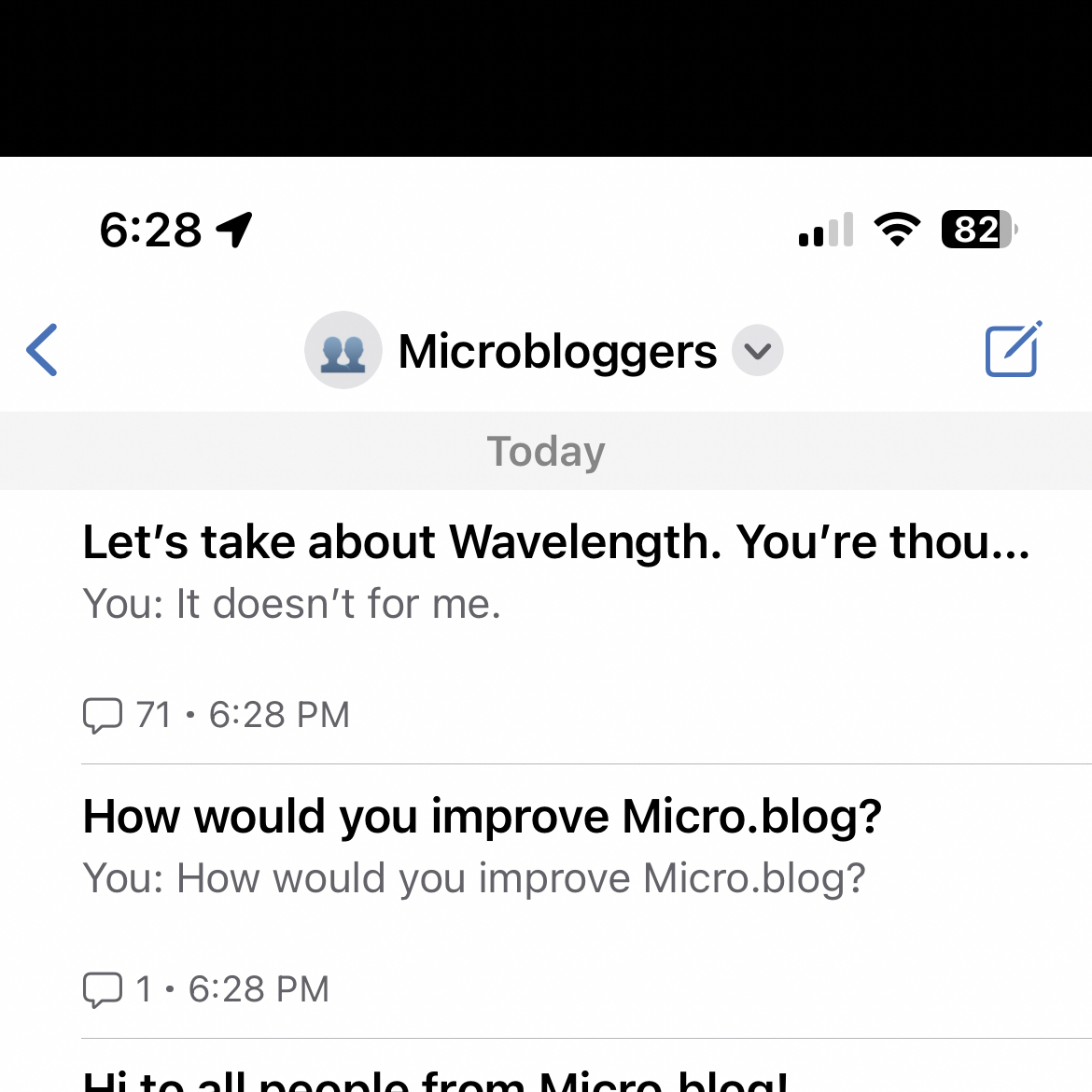
For those who are (very) curious about Wavelength. This in an invite link to join a private group. It is called “Microbloggers”. You’re welcome.
Why a dedicated music app for Apple Music Classical? When we first learned that Apple would launch a different app for Apple Music Classical, I was surprised and wondered why not add a big tile in its current Apple Music app. Apple explains this in more detail here about the reason:
Classical music is different. It has longer and more detailed titles, multiple artists for each work, and hundreds of recordings of well-known pieces. The Apple Music Classical app is designed to support the complex data structure of classical music.
I get it. It makes sense. Now, here is another question: could there be a need to create more “genre-dedicated” apps offering different browsing and listening experiences? How much could an app be different for electronic music? How about creating an app dedicated to music videos? All of these apps could tap the Apple Music back end. This needs more time to think about.
Oh, no iPad app, at launch, really?
Notion releases buttons. The world goes wild🤯. Seriously, I came a cross this announcement on YouTube this morning and god I never thought buttons could be that useful in such a tool. I’m not holding my breath for such a thing in Craft, but yeah, I’m already thinking about a pretext to bring back Notion into my workflow just for the kick of using this🙃.