About these Read Later apps or services

Thought of the day: read later lists are useless for me. I tend to forget about the items I save in them. It was true with Instalaper, Pocket, Safari and now Reeder. I don’t read more because I save things in them. The trick for me is to read it now or else. Simple. The longer I wait to pick an article out of these lists, the less likely I will read it. So, I end up with a mass of unread and expired content. Are you more successful than me?

Guilty of Digital Consumerism (#apps #services #workflow)

Greg Morris on digital consumerism:

The level of consumerism and marketing tricks being used to sell apps and services is growing over time. They all promise to fix that gap in your work life, just like adverts promise to fix the one in your love life, or improve your happiness, or whatever it is. It’s all lies.

I cannot talk for others, but for me, when I’m jumping on another service or a new app, it’s because it offers a seizable improvement. Going from Notion to Craft is my latest example of such move. I’ll elaborate on this at length in a feature post in the very near future.

I recently wrote “Are we digital nomads?” My answer is yes. It seems we cannot stay in one place for a very long time, looking for the new, the latest and greatest, all the time. We’re bored. This is what it is. Form takes over function. Or is it? Again, my blogger workflow is full of moving parts and I consider it is an ongoing experiment.

About those WebP images (#google #usertracking #nonstandard)

WebP image format goal, according to Google:

WebP is a modern image format that provides superior lossless and lossy compression for images on the web. Using WebP, webmasters and web developers can create smaller, richer images that make the web faster. WebP lossless images are 26% smaller in size compared to PNGs. WebP lossy images are 25-34% smaller than comparable JPEG images at equivalent SSIM quality index.

I’ve seen more and more WebP images in recent months when I try to download an image from Safari. It’s frustrating. It’s not a standard. Making the web load faster so tracking scripts can run more easily, that the reason behind all those “initiatives” from Google. WebP is a terrible idea. AMP pages was a terrible idea. And FLOC is a terrible idea. Google is full of terrible ideas. Even for searching, Google is bad. Boy, I hate Google.

I’ve been using WebP Converter recently.

[@Gaby](https://micro.blog/Gaby) I get a morning email digest from Mailbrew with my Twitter timeline and funnel YouTube and Reddit into RSS. The social apps are filled with recommendations and features designed to keep you “engaged”. But there’s always an actual bottom to my unread emails and RSS feeds.

Throughout the day, the only types of apps I “just check” are email, RSS, and my Micro.blog client. Micro.blog gets a pass because it seems to be filled with genuinely good people that post things that make me happy — at least that’s what I see in my timeline. :)

This setup gives me more time to read my read later items, to write, and work on other projects that actually accomplish something.

Here is a great way to put Mailbrew to work and help us create free time in our busy schedules.

Are we digital nomads? (#blogging #internet)

In the last few months, on Twitter and on Micro.blog, I’ve been witnessing something that takes the shape of a small phenomenon: people are moving from one place to another in the digital space. Many are writing about their experience of moving from one hosting site to another. Some are leaving WordPress to return to Ghost. Others are proudly putting together their hosting solutions. The same happens in the newsletters hosting space: people are leaving Mailchimp to go to Substack or Revue. People are looking to get better return on their investment both in time and money. Others are simply trying to optimize their blogging workflow. There is a myriad of reasons why people decide to leave a place for another one.

I find these numeric movements quite fascinating. Are you one of those guys?

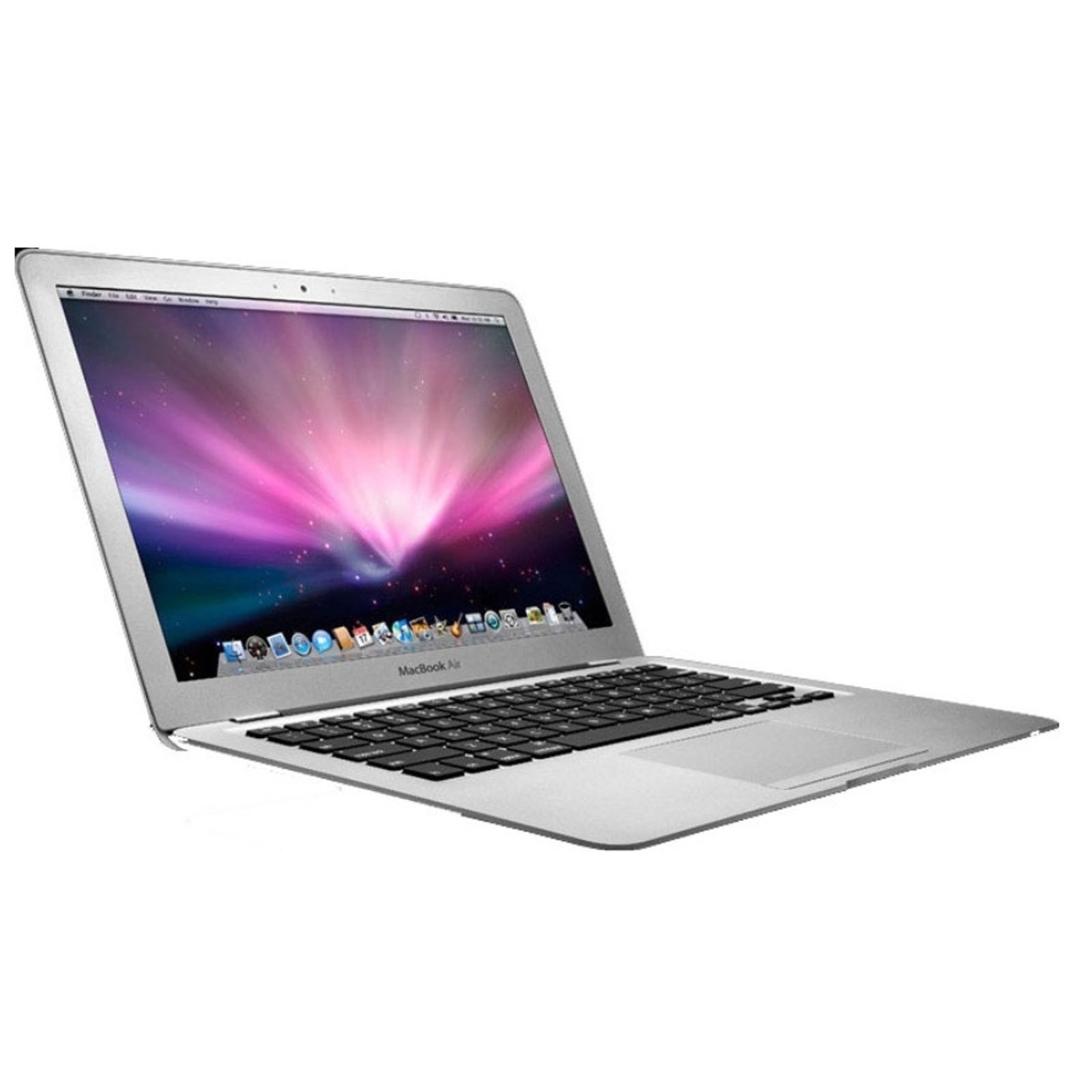
Welcome back to the Mac computer club @mattbirchler (#apple #macbookair #applesilicon)

As much as you can like to work on the iPad, there are edge cases where the iPad falls short. Since I got an Apple Silicon powered Mac, and thanks to many nifty Mac utilities, I rediscovered what it really means to be productive and efficient on a computer platform. This blog post by Matt Birchler is an example of an edge case being better served by a traditional yet powerful computer.

On the subject of small and focused Mac productivity utilities, The list of application purchases I made since moving to this Mac mini is pretty long. Here it goes, in no particular order.

  • HazeOver
  • Unclutter
  • Keysmith
  • Bartender 4
  • DefaultFolder
  • Hush
  • StopTheMaddness
  • Alfred
  • Hazel
  • CheatSheet
  • PopClip
  • Downie
  • Permute
  • SafariMarkdownLinker

There is something those utilities have in common: in one way or another, they augment the macOS experience. Such things are not quite possible, yet, on the iPad.

The challenges with online speech and publishing (#socialnetworks #socialmedia #platforms)

A recent article by Benedict Evans exposes how hard it is to “fix” social networks.

“The internet and then social platforms break a lot of our definitions of different kinds of speech, and yet somehow Facebook / Google / Twitter are supposed to recreate that whole 200-year tapestry of implicit structures and consensus, and answer all of those questions, from office parks in the San Francisco Bay Area, for both the USA and Myanmar, right now. We want them to Fix It, but we don’t actually know what that means.”

I often think about issues that platforms like Facebook brings to our society. I don’t pretend to have any solution. I can’t quite define what Facebook is actually from a societal point of view. That being said, a lack of definition and understanding cannot prevent me to wish for things to be done differently. And I have one simple wish.

I want the eradication of algorithm-based feeds. I want them to be regulated, prohibited even. At the very least, it should be an opt-in “feature”. I want the return of chronological feeds. No tweaks, no tricks, nothing more. Nothing less. I want all people to have a look at the same reality. Two people having the exact same followers and following the same guys should give the same timeline. Period.

Without hyper-manipulated feeds, we have to wonder about the usefulness of all gathered data about us and our behaviours. Maybe ads targeting doesn’t make as much sense in tact hypothetical context.

If two people don’t see the same thing, it’s because the choice was made by an individual wishing to control his or her exposure, not by a corporation’s algorithm or an arbitrary group of people.

That’s my wish. Let’s try it and see if things change for the better.

The Insurmountable Problem for Intel (#intel #apple #applesilicon)

Intel CEO Pat Gelsinger

Let’s start with a quote from Intel CEO Pat Gelsinger (as reported by The Oregonian)

“We have to deliver better products to the PC ecosystem than any possible thing that a lifestyle company in Cupertino. We have to be that good, in the future.”

The fundamental problem with Intel is that they will never make the whole widget (the products) like Apple does. That’s the key for insanely great products. Intel’s CPU are small enablers at best. The vertical integration of the whole stack (hardware, OS, apps, services) makes what Apple is all about. There is no way for Intel to emulate that by cooperating with hundreds of OEMs.

Sorry, Pat, nice try.