Since I began extensively testing iPadOS 15, my idea of upgrading my 2018 11” iPad Pro to a 2021 12.9” version is suddenly less tempting… what does this even tell about the very nature of iPadOS 15 for the iPad Platform?
On design trends — sadness
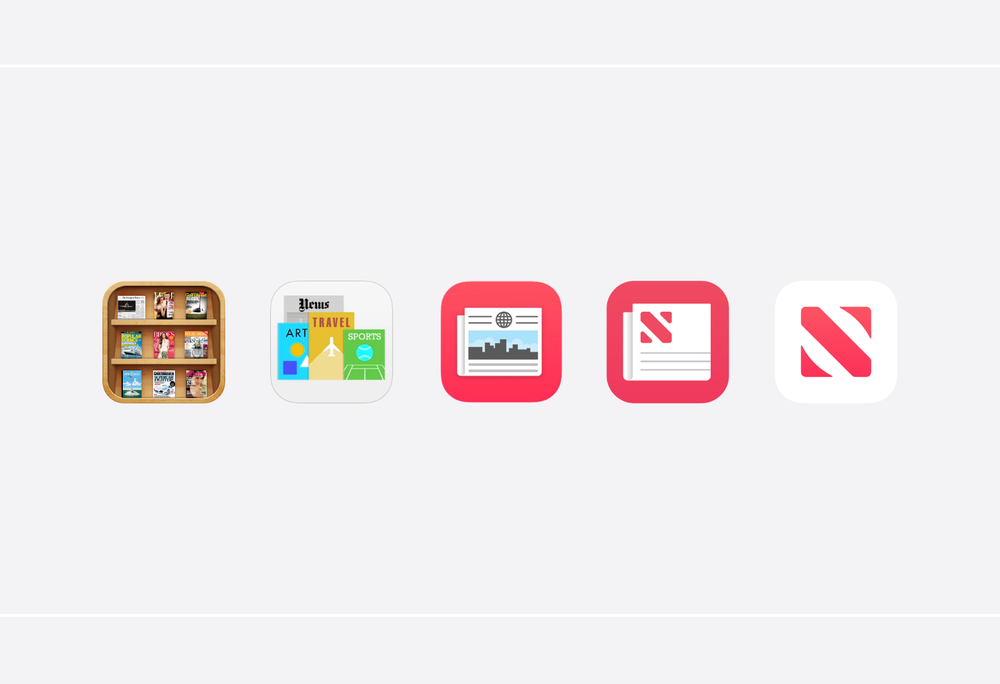
While reading a recent article from Basic Apple Guy about News+, there is this illustration that shows how far Apple News icon has come since its beginnings. I have included the illustration here. It shows how bad design has become in the last five to ten years. That is really depressing to see. As much as things like AR and LiDAR technology help bring real world and virtual world closer together, UI design seems to go the opposite direction. Why is that? When will that trend stop and maybe revert a bit? Why can’t we get visually joyful icons anymore? Is it a matter of design costs being too high?
On Antitrust legislation and Apple iPhone experience
I always thought that politicians and their aides don’t really have clues about technology in general. If you want to fuck up something in tech, ask the politicians. This is exactly what could happen if these antitrust legislation proposal become laws.
Imagine that: you take out your brand new iPhone out of its box, turn it on only to be welcomed with an empty screen, no builtin apps, just a simple “Hello”. In the name of what: competition. Developers like the one behind Basecamp and HEY would be so happy, because in this hypothetic world they would feel in better position to compete against Apple. What a bunch of retards.
I just wish this type of legislation would be in effect in the US, so that here in Canada, we would continue to get the standard iPhone experience.
It was a reminder that technology can play unexpected roles in our lives. Source: Seeing Death From a Distance, Through FaceTime Calls - Numeric Citizen Blog
The Pandemic Effects on my Digital Good Purchases
I never bought so many applications and utilities or subscribed to so many services since the beginning of the pandemic. For the latter, I had to use Apple’s Number just to keep track of all of them😳🤪. Because I’m working from home since March 2020, my work-related expanses are close to zero. I don’t go buy a coffee or snacks in the middle of the workday as I used to. I don’t buy transportation titles anymore. I no longer commute. Furthermore, I no longer travel. My home office setup upgrade is complete. This mean that I have more to spend on something else. I’m more inclined to buy digital goods. Some are impulse buys. That’s why I invested in many macOS applications and utilities which gave me the idea of writing this article “Tips & Tricks & Utilities for Boosting Your Productivity with Apple’s macOS Big Sur”.
I don’t know if a return to normal will push me to cancel any of my applications or utilities subscriptions. I don’t think so as I think they are needed and useful to my blogger workflow. I return to this commuting world as I’ll keep working from home forever. I’m not alone and this makes me wonder how profound changes caused by this pandemic could be on so many economic levels.
Well, if that was the case, this would add fuel to any anti-trust initiative. No?
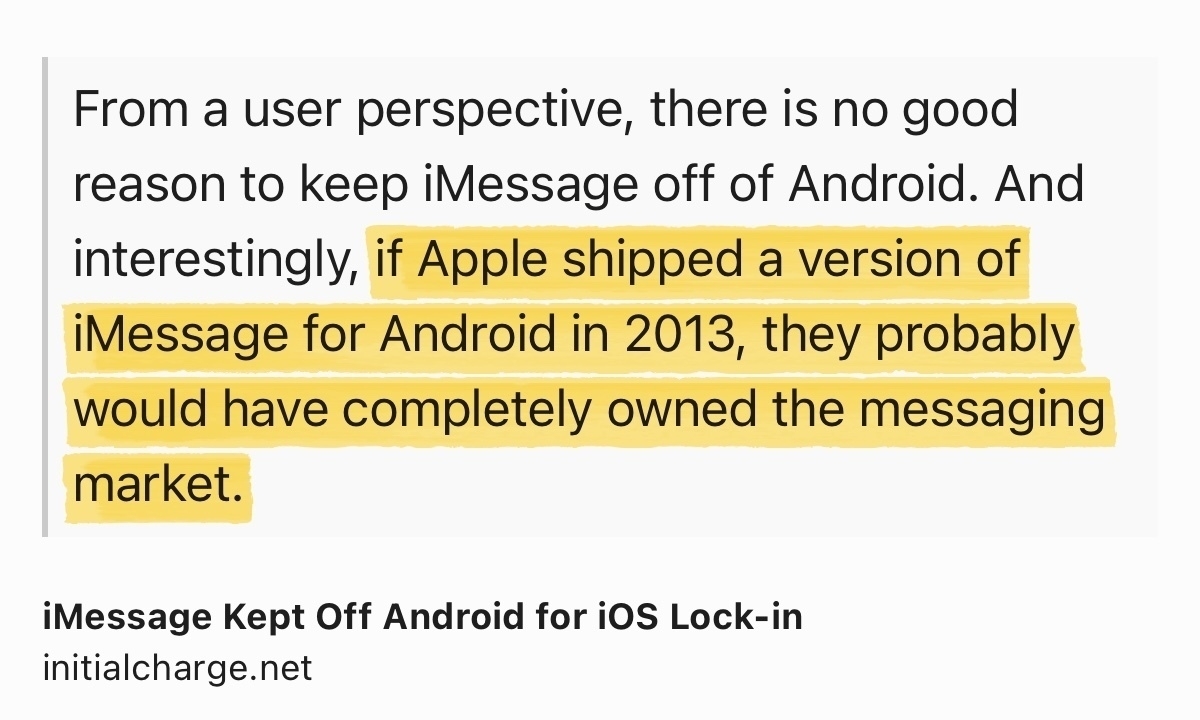
iMessage Kept Off Android for iOS Lock-in initialcharge.net/2021/04/i…
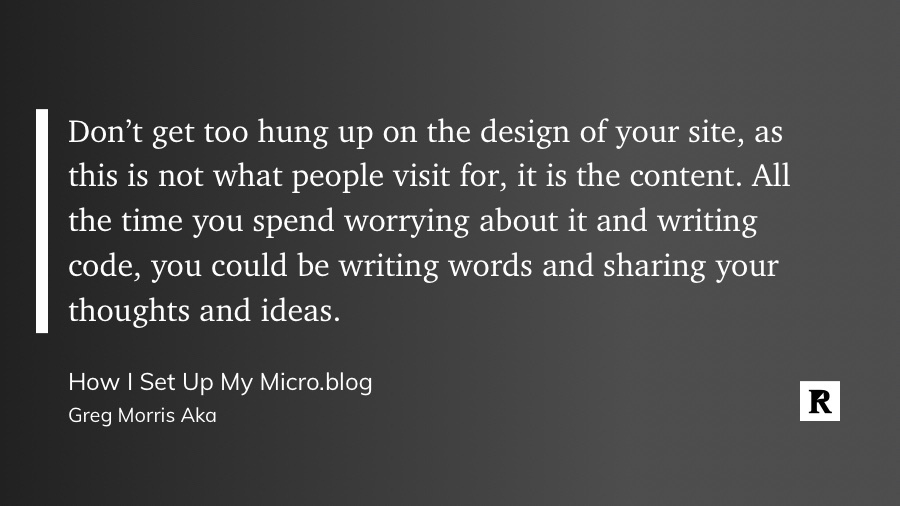
I should read this every day. Thanks to @gr36.
My micro.blog instant joy
Friday thinking… I find is so refreshing to be able to have decent conversations on the open web. There is no drama here, everything seems so… simple. It brings back some confidence about human’s capabilities to engage in respectful conversations…. That’s be because there are lots of nice guys here on Micro.blog… it is lacking elsewhere (no finger pointing here, I won’t name a platform… but, well, ya know, right?).
Returning to normal programming.
About these Read Later apps or services
Thought of the day: read later lists are useless for me. I tend to forget about the items I save in them. It was true with Instalaper, Pocket, Safari and now Reeder. I don’t read more because I save things in them. The trick for me is to read it now or else. Simple. The longer I wait to pick an article out of these lists, the less likely I will read it. So, I end up with a mass of unread and expired content. Are you more successful than me?
Guilty of Digital Consumerism (#apps #services #workflow)
Greg Morris on digital consumerism:
The level of consumerism and marketing tricks being used to sell apps and services is growing over time. They all promise to fix that gap in your work life, just like adverts promise to fix the one in your love life, or improve your happiness, or whatever it is. It’s all lies.
I cannot talk for others, but for me, when I’m jumping on another service or a new app, it’s because it offers a seizable improvement. Going from Notion to Craft is my latest example of such move. I’ll elaborate on this at length in a feature post in the very near future.
I recently wrote “Are we digital nomads?” My answer is yes. It seems we cannot stay in one place for a very long time, looking for the new, the latest and greatest, all the time. We’re bored. This is what it is. Form takes over function. Or is it? Again, my blogger workflow is full of moving parts and I consider it is an ongoing experiment.