Are we in a world war yet?

In “The War That Could Swallow the World”, David French writes:

“I’ve often wondered what it was like to be alive in the summer of 1914, much less in 1938 and 1939. When did people start to realize that the world was on the brink of catastrophe? Speak up too soon or too frequently, and you look ridiculous — like the Chicken Little of World War. Speak up too late, and you live (if you live) with bitter regret.”

I often ask myself similar questions. When does it feel like it? Are we calling a world war after-the-fact? Does it matter in the end? This blog used to have a blog post category named “UkraineWar”. It will be renamed “Conflicts” which I think feels closer to what I perceive from today’s world.
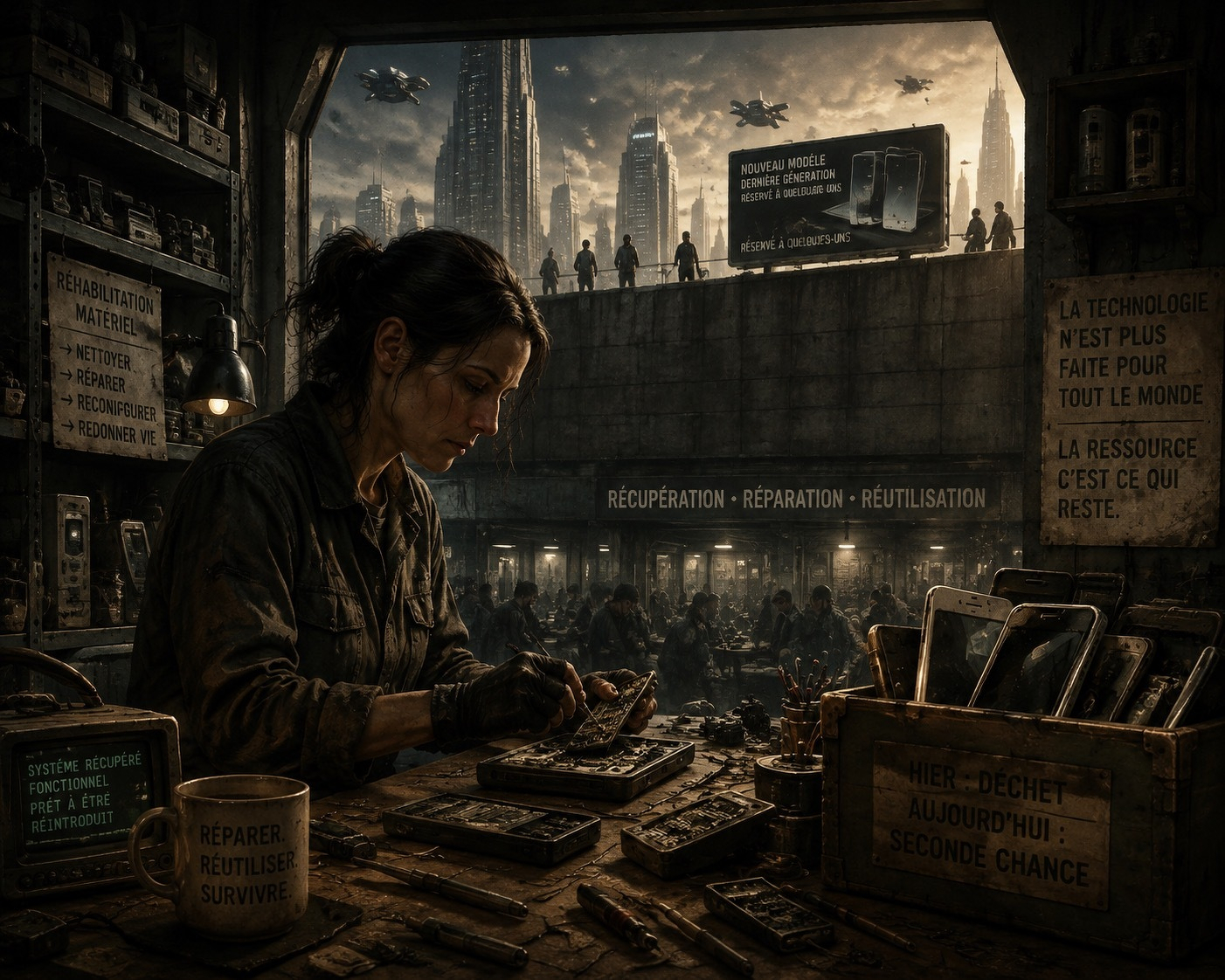
In the TV series “Silo” there is a woman who seems to be responsible for retrieving and refurbishing old computer equipment or various devices. It makes me think that with the current situation, where electronic device prices are soaring, the periods of price drops for a computer or smartphone are over. One day, society might see the latest-generation devices become inaccessible to the general public, who will then have to settle for rebuilt or refurbished devices.

Frustration buildup

I don’t know if I should trust the news, but it seems that opposition to data centers and artificial intelligence is growing. Nowadays, you have to be cautious about what the media spreads. Controversial topics sell, but they don’t always reflect reality. Still, I get the feeling that frustration is gradually building. 🤨

Those open space offices suck

Open-plan offices have many drawbacks, and I was reminded of another one today. Instead of a generic, rotating desk, I much prefer having a dedicated, private office. I want a space of my own, and I enjoy seeing how others personalize their workspaces. You can learn so much about people’s interests and personalities just by seeing how they occupy the space where they spend a third of their lives.

The Helper

This morning, after reading and asking Kagi Summarizer for a summary of this article, I wanted to write a response and attempted to craft a counterargument, first using Kagi Summarizer, then using Claude AI. I reviewed numerous versions but remained unsatisfied with the results. After reviewing my options, I ultimately decided to create this version, entirely my own. I still have a feeling that AI helped forge my thoughts.

The Solution Was to Double Down on my AI Subscription

Since reading David’s article, “the solution might be cancelling my AI subscription”, I cannot stop thinking about how different our experiences are.

Six months ago, right before subscribing to Anthropic’s Claude AI, none of the following custom-built apps existed: a useful, personally fitting bookmark manager; a purpose-built RSS reader that works hand in hand with my bookmark manager; and a simplified task manager that also works in conjunction with the other two. As an experienced user of many RSS readers, bookmark managers, and task managers, knowing my friction points with these apps, I have always dreamed of what would be perfect-for-me versions of them. So I built those, one by one.

Thanks to Claude Code and my vision for what would make the perfect versions of each of these apps, I could build them without being constrained by not knowing Next.js, TypeScript, CSS, etc. I don’t plan to make commercial versions of these nor open-source them. There are a few, and I can tweak them as I see fit and as my needs evolve; this is where I’ll keep focusing. AI empowered me and will continue to do.

You see, the solution for me is to keep iterating and keep my subscription. Two different stories, two different outcomes. Maybe there is something that I didn’t catch in David’s experience.

Food for Thought on a Rainy Friday

What if, as soon as we shared content on the Internet, you couldn’t remove it as soon as someone was referring to it or embedded it in some other content? I’m thinking about the open web here… would this hypothetical web be called the open web anyway? Would we be more intentional when sharing content having this rule baked in? This chain of thoughts was triggered when I came across a website with a blog post with some embedded content from YouTube. Some videos were no longer available and made the blog post more or less diminished.

Manton Reece writing about Software brain:

Maybe our belief in new technology has been warped by cynicism. We’ve been beaten down by ad platforms, manipulated by algorithms. We’ve grown weary of the relentless pace of Silicon Valley. We assume every CEO must be a liar and that even good intentions are corrupted by money.