I’m putting the final touches to an upcoming review of Quick Reads, built by @mattbirchler. Below is a work-in-progress diagram, from jotted notes to the final version. Much more detail tomorrow.

I’m putting the final touches to an upcoming review of Quick Reads, built by @mattbirchler. Below is a work-in-progress diagram, from jotted notes to the final version. Much more detail tomorrow.
For those braves people who are running macOS 27 beta 6, Mac App Store updates are not working. Anyone with same behaviour?
I always wondering if publishing In-the-moment audio bits could be something that I could explore. Consider this the first step. 😉
For the second time in as many days, I’ve seen paid promotion from Incogni (one in a YouTube video and on the 9to5Mac website). According to the Incogni website:
Incogni is a personal data removal service that automatically removes your information from data broker websites, significantly reducing your digital footprint. Anyone can get instant access to personal data online—Incogni makes sure it stays private.
I was curious and headed to their website, where you can enter your email address to test the service. The problem is that, according to their ToS and privacy policy, they collect email addresses this way so they can bug you with promotions and all that. I find this against their value proposition and it weakens their credibility. People willing to pay for such a service are probably protective of their email address, and yet, this is the first thing Incogni collects. If they offered a way to test the service, albeit in a limited way, while saying they don’t collect email addresses to perform these tests, it would be quite another matter, and I would be more willing to test and maybe even subscribe! But no. Bummer. I’ll pass.
I’m currently testing Quick Reads by @mattbirchler, and I must say that I’m impressed. From the onboarding experience to the actual product use, it’s a joy to use. The read-aloud voices are top-notch. I have small and bigger plans for this relatively new service, and I’m really looking forward to making this happen.
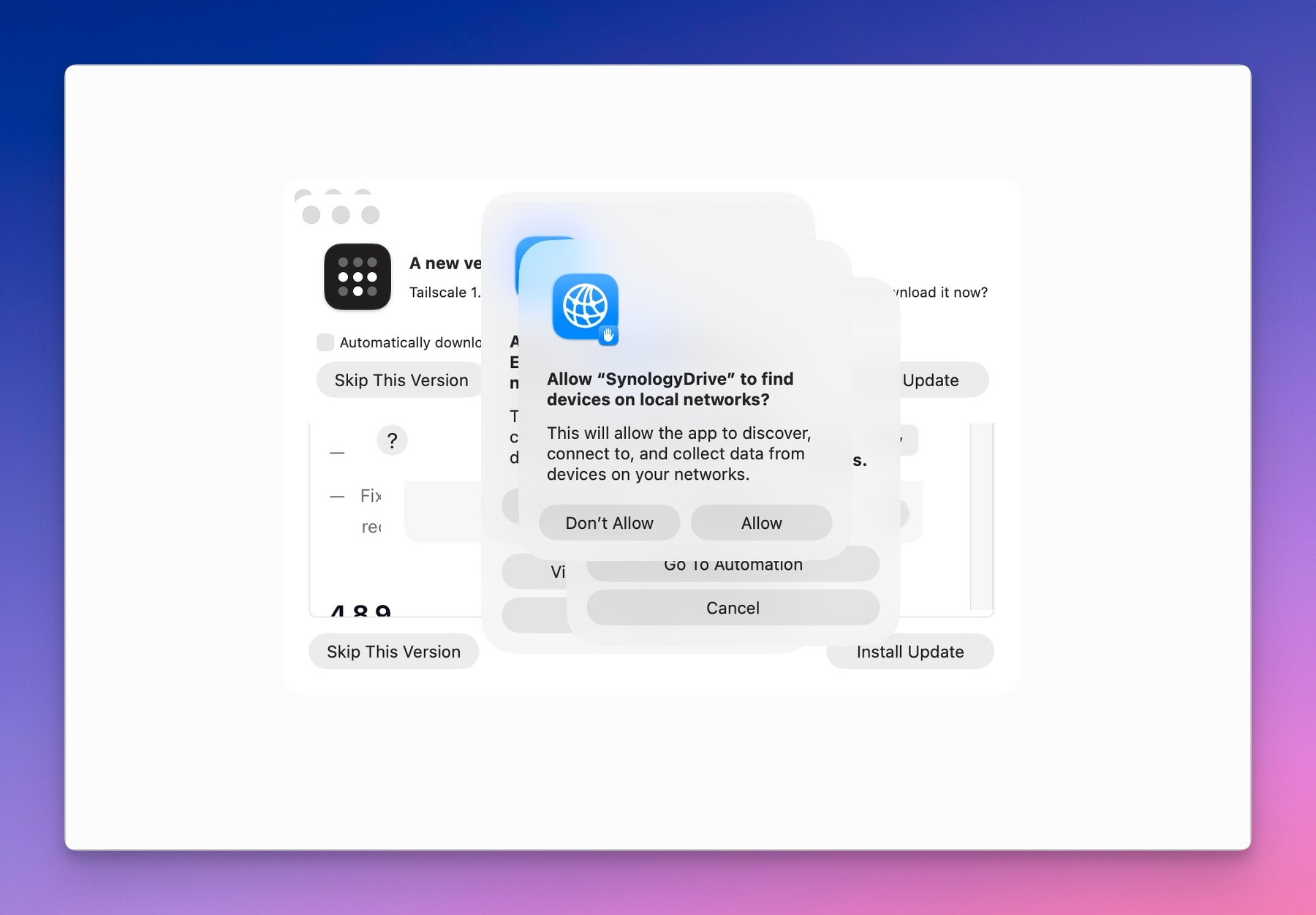
Fun user experience after installing macOS 27 beta 5. Why are all these apps still requesting permissions for things I have already granted?
No One’s Happy recent blog post suggesting not to use native apps:
“Most native apps collect far more data than their website equivalents ever could. They request permissions to hardware, sensors, and background processes that browsers deliberately restrict. The third-party software embedded in these apps frequently transmits your location, device identifiers, and behavioral data to third parties before you even see a consent prompt. This data is in tandem bought, sold, and aggregated by brokers. It has been used to out individuals, track immigrants, and enable prosecution over reproductive healthcare.”
While this is true, refusing to use native apps is surprising advice. One might think the App Store submission process that every developer is subject to prevents bad actors, but it doesn’t. Coupled with the developer’s ordeal with the App Store review process, some developers are suggesting focusing development efforts on web applications instead. And finally, vibe coding might be another factor driving a move toward web application development. Yet the web is a jungle where user tracking is a standard “feature” that mines the browsing experience with bloated web pages that sell you ads and lead you to forced engagement.
What can I learn from the demise of EchoFeed? Earlier this year, when I heard about this service, I looked into it to see if it could be useful. It wasn’t, thanks to Micro.blog’s ability to cross-post to Bluesky, Mastodon and more. Plus, at first it looked like an experiment more than anything else. I didn’t know EchoFeed’s long-term goals. I was on the breaks.
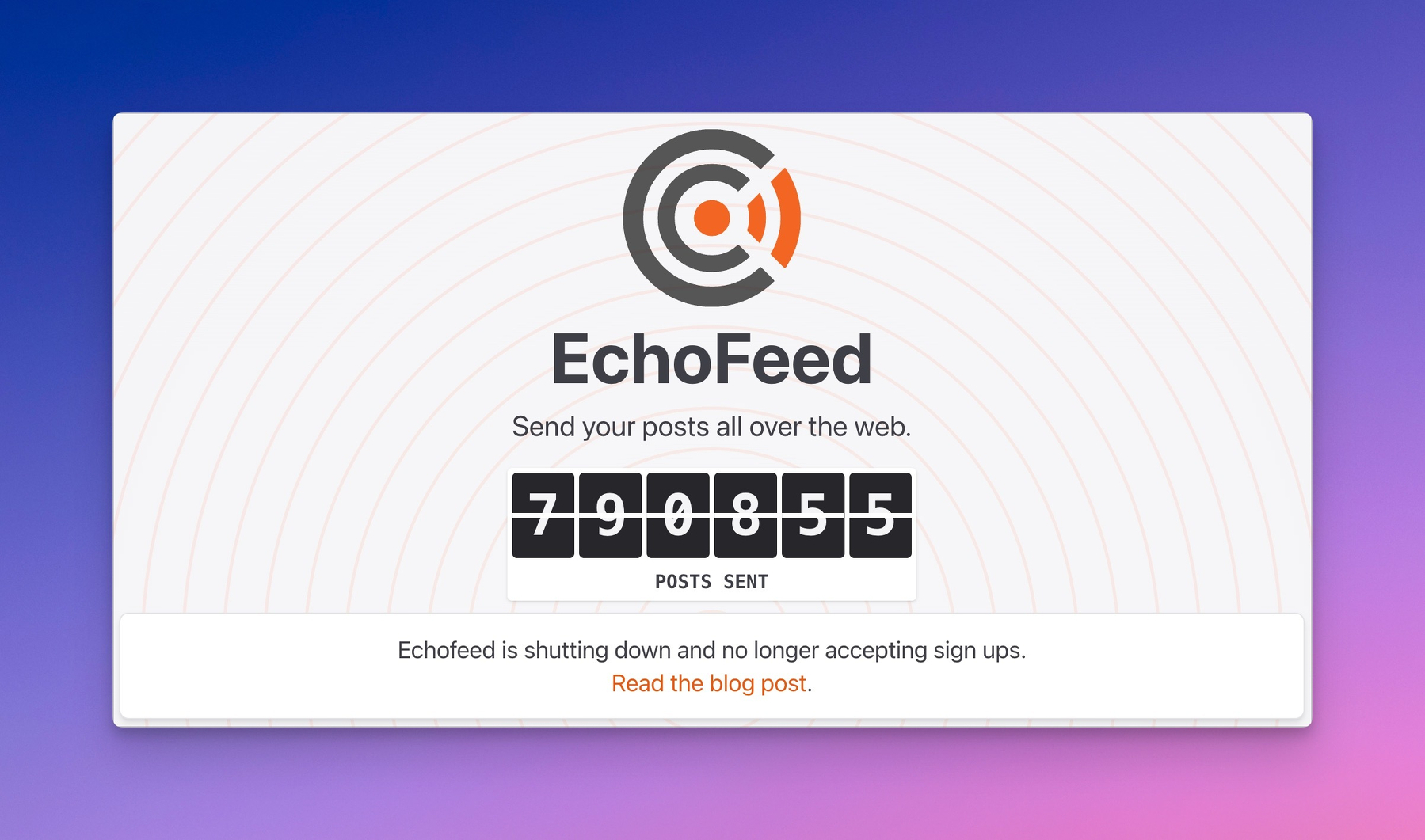
I’m wary of one-person services like EchoFeed. Another example is FeedPress. I like this service a lot, but I think there is only one person behind it, and it’s owned by a parent company which I know nothing about. It’s not entirely clear from this post what their mission is. What happens if this guy decides, or the parent company says, it’s no longer viable? Moving off EchoFeed might be a pain for people who need cross-posting capabilities. I highly doubt these people are willing to move to Buffer.
The same could be said about moving off FeedPress. It would be a pain in the ass to reconfigure all my feeds. The same torment applies to Micro.blog itself (or Scribbles.page, for that matter!). What is the future of Micro.blog if something bad happens to its founder? What is the continuity plan? Micro.blog has done everything it can to enable data portability and ownership, but moving things around, even if you own most parts, is not as easy as it sounds. In today’s world, nothing is permanent, and planning for this is mandatory.
Manton Reece writing about the demise of a Mastodon instance
I had missed that mastodon.cloud is shutting down. While its active user base has been shrinking, it still has a lot of total users and millions of posts. There’s still no way to migrate posts between Mastodon servers. (Mastodon posts → Micro.blog and some other fediverse servers works.)
POSSE principle is often talked about when referring to one of Micro.blog’s strengths, but being able to own your content and import content from other places are also important distinctive features of Micro.blog.
Since my bookmarking app now features links to Bluesky, I’ve observed that my Bluesky timeline is heavily political, which I dislike. I’m unsure how to unfollow people or lists. I wish there was a way to simply reset the timeline and start fresh for a better experience.